Updated 23 November 2026
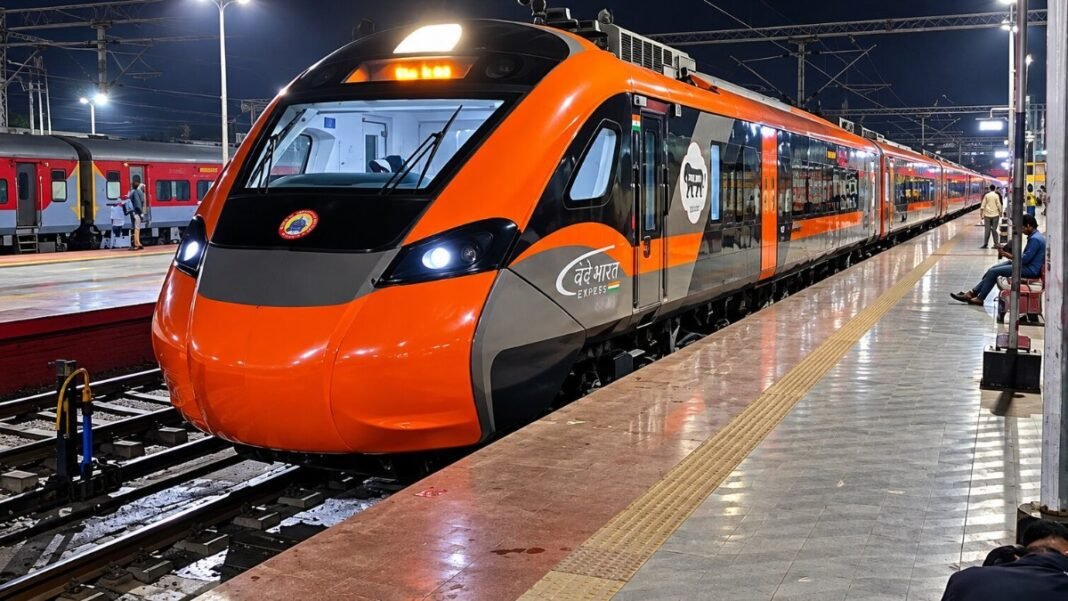
An empty Vande Bharat rake reportedly covered about 463 km from Hatia in Jharkhand towards Jhansi in Uttar Pradesh on 24 October 2026 with its coach brakes isolated, after two loco pilots had flagged poor braking. An order of the South Eastern Railway dated 7 November 2026 asks the Ranchi division to investigate.
Key points
- The rake was empty (no passengers) and was reportedly hauled by a freight locomotive over roughly 463 km on 24 October.
- Reports say one loco pilot found brake power very poor after leaving Hatia, and another could not get brakes to apply by reducing brake pipe pressure.
- At Deen Dayal Upadhyaya station in Chandauli district, officials reportedly found the brakes of all coaches isolated.
- The South Eastern Railway order of 7 November seeks a detailed inquiry and steps to prevent a repeat. The findings are preliminary.
- Passengers can call or message Rail Madad on 139 for safety complaints.
What happened to the empty Vande Bharat rake?
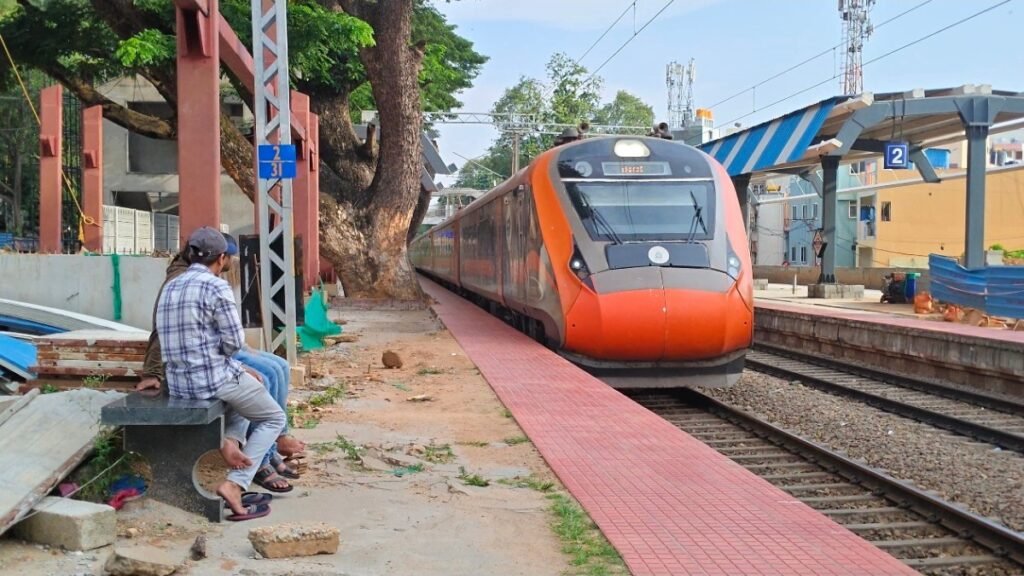
According to reports that quote the South Eastern Railway order, a Vande Bharat chair car rake with no passengers was moved from Hatia to Jhansi on 24 October. A goods locomotive pulled it. The reports say the train ran mainly on the locomotive’s own brakes and regenerative braking, while the coaches’ brakes were not working as they should.
The order was addressed to the Divisional Railway Manager of Ranchi division. Everything below about the run comes from those reports and the order they describe; the Railways’ own inquiry is the place where the final facts will be set out.
Who raised the alarm, and what did the inquiry find so far?
Reports say a loco pilot tested the brakes after leaving Hatia, found the brake power very poor, and gave a written complaint at Ranchi to the section and traction controllers. A second loco pilot, working from Muri, reportedly said the brakes did not apply when brake pipe pressure was reduced.
The preliminary findings, as reported, point to several points where a check was missed. Carriage and wagon staff did not physically check the brakes before the empty rake left. Controllers at the stations took no action on the reports. The crew, who were not familiar with the Vande Bharat braking system, did not confirm that the coaches were braking. The order describes these as multiple failures by various staff. These are findings at the probe stage, and the people concerned have a right to be heard.
The rake was stopped for inspection at Deen Dayal Upadhyaya station, where the coach brakes were reportedly found isolated.
How do train brakes work, and what can “faulty brakes” mean?
Most Indian trains use air brakes. A pipe runs the length of the train, filled with compressed air. When the driver lowers the pressure in that pipe, valves under each coach send air to the brake cylinders and press the brake blocks or discs on the wheels. Raise the pressure and the brakes release.
Modern sets like the Vande Bharat also use electric control and regenerative braking, where the motors slow the train and feed energy back. A locomotive pulling the rake has its own brakes too.
“Faulty brakes” can mean different things, so it helps to be exact:
- Isolated brakes: a cock or switch has cut a coach’s brake out of the system on purpose, often to move a rake safely with a defect. The coach then rolls without braking, and the other vehicles must do the work.
- Weak brake power: brakes apply but slow the train less than expected.
- Link problems: two different braking systems, here a freight locomotive and a Vande Bharat rake, are not properly connected, so the signal to brake does not reach every coach.
What does the rulebook say about brake tests and reporting a defect?
Indian Railways follows the General Rules and Subsidiary Rules, along with working manuals and circulars from the Railway Board. In plain terms, these set out that a train must be examined, and its brakes tested, before it leaves, and that the brake power must be adequate for the load and the speed. For goods trains the brake power certificate records this; staff are also told to report any defect and not to continue with a train that cannot stop safely.
The exact rule numbers and the latest circulars are published on the Railway Board’s website (indianrailways.gov.in) under the Mechanical Engineering and Operations directorates. Readers who want the precise wording should read the current rule books there.
| Step | Who | Purpose |
|---|---|---|
| Train examination and brake test | Carriage and wagon staff | Check coaches and brakes before departure |
| Brake feel or test after starting | Loco pilot | Confirm the brakes slow the train |
| Report a defect | Loco pilot, to controller | Get the train stopped or examined |
| Action on the report | Section and traction controllers | Pass the message on and arrange checks |
What have the Railways said and done?
Reports quote the South Eastern Railway as calling the running of a train without adequate brake power a serious safety concern that could lead to a major accident. The order asks for a detailed investigation into staff lapses, along with corrective and preventive measures. As of the reports dated 15 November 2026, no suspensions or other disciplinary action had been mentioned, and the rake number and staff names were not given. Updates, if any, will appear on the zone’s official pages and Indian Railways notices.
Passengers who like to read up on recent Vande Bharat service issues can also see our report on a Vande Bharat boarding case involving relatives and a fine, and our guide to the Bengaluru-Mumbai Vande Bharat Sleeper.
Where can passengers check train safety information or complain?
- Rail Madad: call 139, use the Rail Madad app or the railmadad.indianrailways.gov.in portal to file a complaint or suggestion.
- Indian Railways and zonal railway pages: the South Eastern Railway and other zones post press releases and notices on their websites.
- Commissioner of Railway Safety (CRS): the statutory authority for rail safety inspections and accident inquiries, listed on the Ministry of Railways site.
- Railway Board: circulars and rule books at indianrailways.gov.in.
Frequently asked questions
Did passengers travel on the Vande Bharat rake with faulty brakes?
No. Reports say the rake was empty and was being moved from Hatia to Jhansi on 24 October 2026, with no passengers on board.
How far did the rake run without working coach brakes?
About 463 km, according to the reports on the South Eastern Railway order.
Why would a train run on the locomotive’s brakes alone?
If coach brakes are isolated or not linked to the locomotive, the locomotive’s brakes and regenerative braking do the stopping. That is much weaker than a train where every coach brakes.
Has anyone been suspended?
The reports dated 15 November 2026 did not mention suspensions. The order seeks an inquiry into staff lapses by the Ranchi division. Follow the zonal railway’s official notices for outcomes.
How do I complain about a train safety issue?
Dial 139 for Rail Madad, use the Rail Madad app, or file it on the railmadad.indianrailways.gov.in portal.
What is a brake power certificate?
It is a record, used mainly for goods trains, that the brakes were tested and the brake power is adequate for the train before it runs.
Questions to think about
- How should crews be trained when a different type of locomotive hauls a rake with a different braking system?
- What checks could confirm that every coach brake is working before an empty rake leaves a yard?
- How quickly should a written brake complaint from a loco pilot reach someone who can stop the train?
- Would publishing the final inquiry findings help passengers trust safety processes?
Sources: South Eastern Railway order dated 7 November 2026 as described in reports; Indian Railways General Rules and Subsidiary Rules and Railway Board circulars (indianrailways.gov.in); Rail Madad (railmadad.indianrailways.gov.in); Commissioner of Railway Safety.