Updated 20 November 2026
The Graded Response Action Plan (GRAP) is the Commission for Air Quality Management’s four-step rulebook for Delhi-NCR. Stage I starts when AQI is Poor (201-300), Stage II at Very Poor (301-400), Stage III at Severe (401-450) and Stage IV above 450. Each stage adds curbs on dust, vehicles, generators, trucks and, at the top, construction and schools.
Key points
- GRAP has four stages tied to CPCB AQI categories: Poor, Very Poor, Severe and Severe Plus.
- Stages are cumulative: Stage III keeps everything from Stages I and II and adds more.
- CAQM approved a revised schedule in September 2026, reported to hold 25 actions in Stage I, 8 in Stage II, 10 in Stage III and 5 in Stage IV.
- The stage in force changes with the daily AQI, so check the CAQM order and the CPCB bulletin for today.
- Health advice from the Union Health Ministry focuses on children, older adults, pregnant women and people with heart or lung disease.
What is GRAP and who decides the stage?
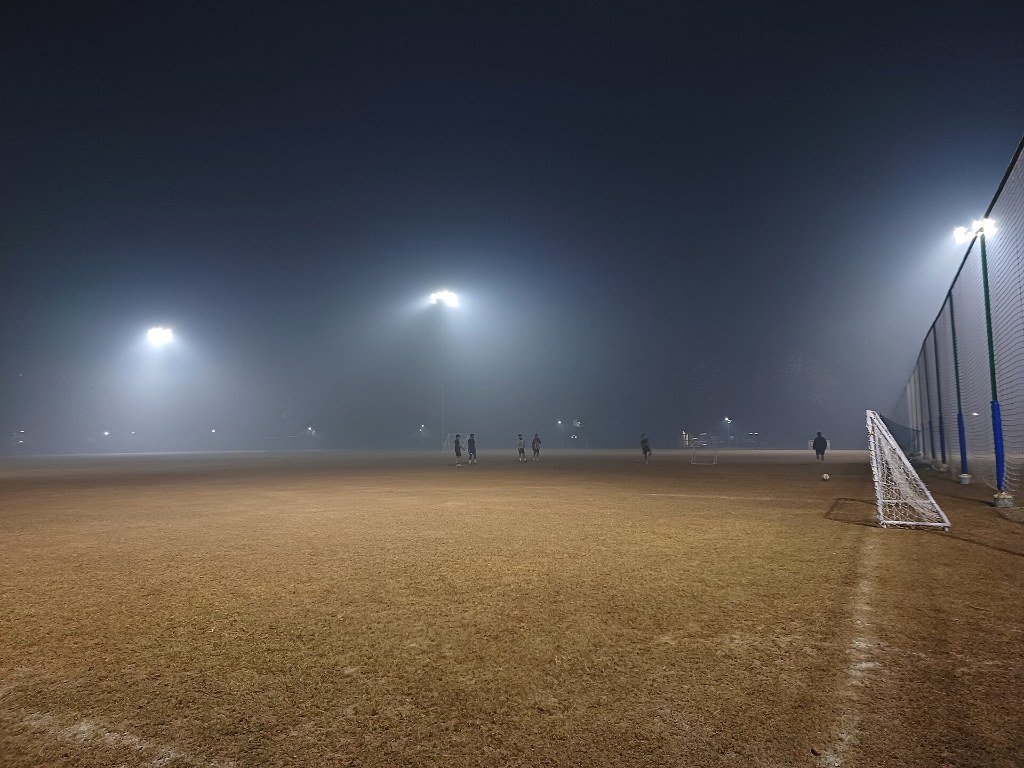
GRAP is a set of emergency steps that CAQM, the statutory body for Delhi-NCR air quality, switches on as the AQI worsens. The stage is decided from CPCB’s AQI readings and the forecast of the sub-committee that monitors them, not by a fixed calendar date.
Delhi, NCR state governments, municipal bodies and pollution control boards carry out the actions. A stage can be raised or lifted within a day.
What are the AQI categories behind each GRAP stage?
CPCB rates AQI 201-300 as Poor, 301-400 as Very Poor and 401-500 as Severe. GRAP splits the top into Severe (401-450) and Severe Plus (above 450).
What does each GRAP stage ban or change?
| Stage | AQI band | What changes (main measures) | Who enforces |
|---|---|---|---|
| I | Poor, 201-300 | Dust control on roads and construction sites, waste and biomass burning checks, more public transport, a diesel generator-set rule, curbs on old BS-IV and below buses entering | Delhi government, NCR state governments, municipal bodies, pollution control boards |
| II | Very Poor, 301-400 | Daily mechanised sweeping and water sprinkling, staggered office timings, curbs on inter-state buses that are not electric, CNG or BS-VI diesel | Same bodies, with traffic police for vehicle checks |
| III | Severe, 401-450 | Ban on non-essential construction and demolition, stone crushers shut, BS-III petrol and BS-IV diesel four-wheeler curbs, entry curbs on older diesel goods vehicles from outside Delhi; states may allow 50% office attendance; hybrid classes up to Class V | State governments, Delhi Pollution Control Committee, transport and traffic departments |
| IV | Severe Plus, above 450 | Truck entry restrictions (clean-fuel and essential trucks exempt), halt on construction and demolition including public projects, wider school and office measures | Same bodies, under CAQM directions |
The September 2026 revision is reported to have moved some measures down a stage. Certain diesel generator-set and BS-IV bus restrictions now sit in Stage I rather than Stage II, and the BS-III petrol and BS-IV diesel four-wheeler curbs were extended to Sonipat alongside Gurugram, Faridabad, Ghaziabad and Gautam Buddh Nagar. Wording and exemptions differ in the order itself, so read the CAQM notice before acting on any single rule.
Which stage is Delhi in today?
Daily readings keep moving. CPCB’s data showed Delhi’s average AQI at 246 (Poor) on the morning of 17 November 2026, and many stations crossed 400 earlier in the month. For the latest reading, refer to today’s CPCB bulletin or the SAMEER app. Our Delhi AQI today after Diwali 2026 update tracks the post-festival readings.
What health precautions do official advisories suggest at high AQI?
The Union Health Ministry’s air pollution advisories, issued through the national programme on climate change and human health, ask people to cut outdoor exertion on poor and worse days and to avoid early morning and late evening walks or runs. Doctors suggest a well-fitted N95 or equivalent mask outdoors and indoor exercise.
Indoors, keep windows shut during peak pollution hours, avoid burning incense or mosquito coils, and use damp mopping instead of dry sweeping. Our note on Diwali-night health mistakes covers smoke and breathing risks too.
Who is most at risk when the air turns Severe?
Children, adults over 60, pregnant women, outdoor workers and people with asthma, COPD, heart disease or stroke history are named in the advisories. Anyone with breathlessness or chest pain should see a doctor.
Frequently asked questions
Does GRAP Stage III include a construction ban?
Reports of the schedule say non-essential construction and demolition work is prohibited from Stage III, with exemptions for essential public projects. Check the current order for the exact list.
Are private cars banned under GRAP?
Not all of them. The curbs target BS-III petrol and BS-IV diesel four-wheelers in Delhi and listed NCR districts. Electric, CNG and newer compliant vehicles are generally not covered.
Are schools closed during GRAP?
Stage III asks for hybrid classes up to Class V, and the highest stage extends school measures to older classes. Exact rules for each school come from state and Delhi education department orders.
Does GRAP mean work from home?
The schedule lets Delhi and NCR governments decide on 50% office attendance with work from home for the rest. It is not automatic.
Where can I check the current GRAP stage?
CAQM’s website (caqm.nic.in) publishes each order invoking or revoking a stage, and CPCB’s daily AQI bulletin gives the reading behind it.
Questions to think about
- Should GRAP stages be triggered by forecast AQI instead of readings that have already crossed a threshold?
- How can residents check, in plain terms, which restrictions apply to their own vehicle or workplace on a given day?
- How should schools decide between hybrid classes and keeping children indoors during Severe days?
Sources: Commission for Air Quality Management (CAQM) GRAP orders and revised schedule; Central Pollution Control Board (CPCB) AQI categories and bulletins; Ministry of Health and Family Welfare air pollution and health advisories (NPCCHH); Prasar Bharati News Services report on the revised GRAP schedule.