
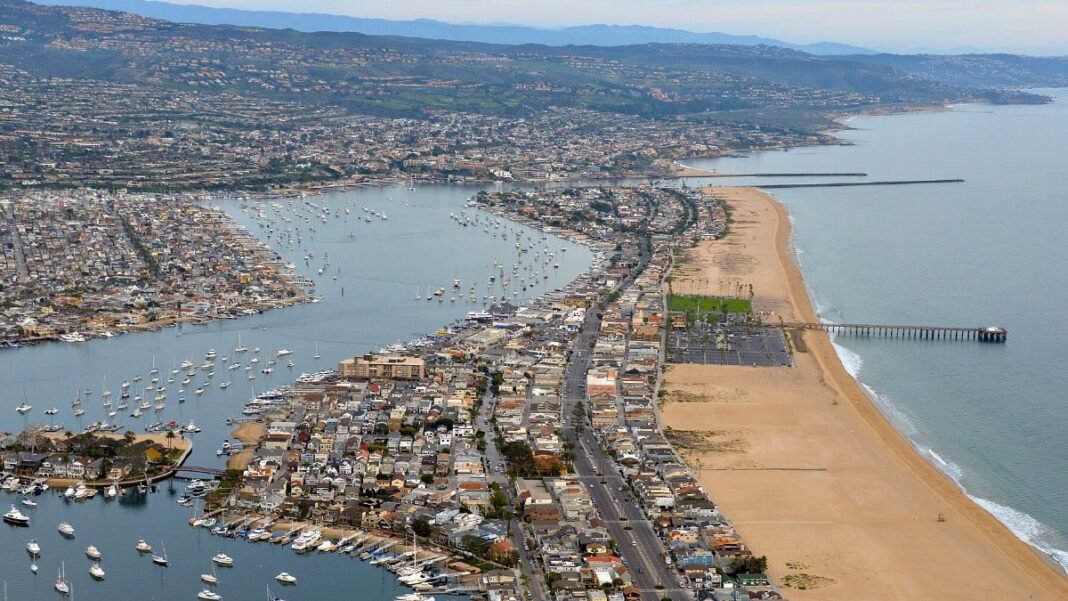
Seawater has been flooding streets in Newport Beach, a coastal city in Southern California, since Friday, October 9. The city says unusually high ocean levels and large waves, linked to the remnants of Tropical Storm Rachel, are behind it.
What happened?
At high tide on Friday morning, water pushed onto a roughly two-mile stretch of the Balboa Peninsula, a narrow strip of land with homes and shops, according to The Press Democrat. In some places water was knee-high, and on parts of Balboa Boulevard it was close to two feet deep. Several cars were stuck and some water reached homes.
Also read: Cyclone Murasu: Bay of Bengal storm, expected landfall, Odisha and Andhra Pradesh alert · All departing US flights grounded for hours after air traffic control communication outage
What have officials said?
- The city declared a local emergency on Saturday to help it get extra resources.
- Residents were asked not to drive, walk or cycle through floodwater.
- Free sandbags were offered at the city’s Corporation Yard, and neighbouring towns such as Laguna Beach, Huntington Beach and San Clemente also gave out sandbags.
- The US National Weather Service issued a coastal flood warning for Orange County beaches from Sunday afternoon through Tuesday afternoon.
Reports differ on beach closures. ABC News said all city beaches and piers were closed until further notice, while a later local report said some beaches were open but with areas blocked off. Please check the City of Newport Beach website for the latest.
Why did it happen?
ABC News reports that two things combined: large waves stirred up by Rachel, and longer-lasting swells linked in part to an El Niño-enhanced Kelvin wave, which is a slow wave of warm water moving along the ocean. Rachel became post-tropical on Saturday night after landfall in Baja California, Mexico.
If you have family or friends in Southern California, the safest steps are the ones officials mention: stay away from flooded roads and beach areas until the warnings end.
Why storm remnants can cause coastal flooding
Even after a tropical storm weakens, its moisture can bring heavy rain over a short period. Coastal areas face extra risk when heavy rain meets high tides or storm surge, because drains and canals cannot empty into the sea quickly. Low-lying streets, parking areas and basements flood first.
Flood safety checklist
- Follow local emergency alerts and evacuation instructions.
- Never drive or walk through flood water; even shallow, fast-moving water can sweep a car away.
- Move valuables and electrical items to higher floors, and switch off power if water enters the house.
- Keep a bag with documents, medicines, water, a torch and a power bank.
- After the flood, avoid contact with flood water, and photograph damage for insurance claims.
Questions to think about
- How can coastal towns get ready for flooding that is caused by storms far away?
- Who should decide when beaches and roads close during a coastal flood warning?
- What can residents of low-lying areas do before high tide arrives?
Sources: ABC News, The Press Democrat, KTLA and CBS Los Angeles, as of October 11–13, 2026. Conditions may have changed.