Updated 21 November 2026
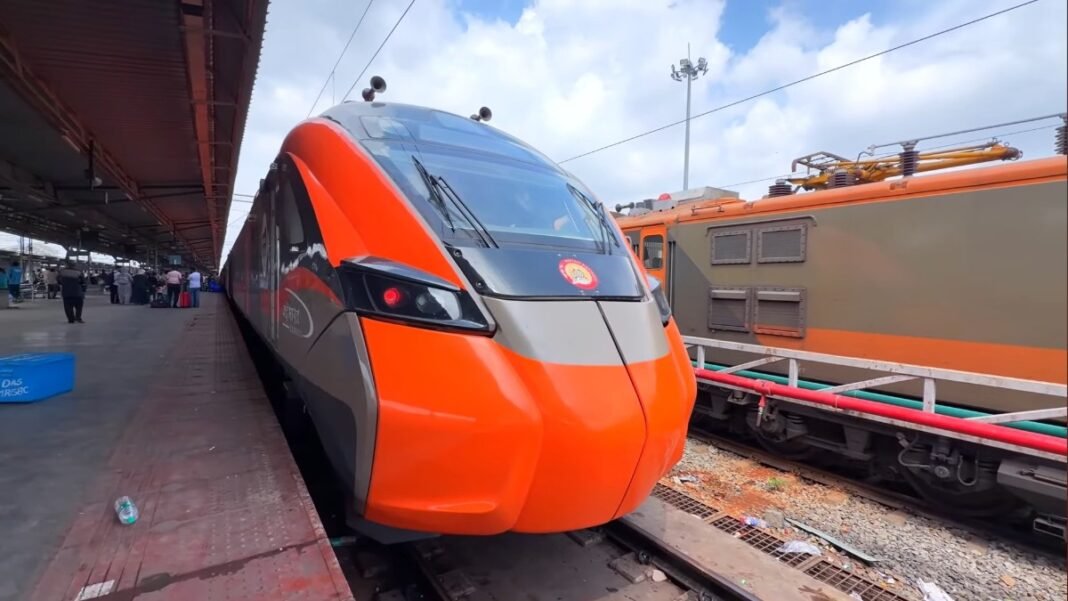
Thirteen relatives who boarded the Varanasi–New Delhi Vande Bharat Express (22415) at Kanpur Central on 15 November 2026 to help family members with luggage were still inside when the automatic doors closed. Reports say the train was halted at Etawah Junction, and the group paid Rs 36,140 as fare and penalty for travelling without valid tickets.
Key points
- Train: 22415 Varanasi–New Delhi Vande Bharat Express, Sunday 15 November 2026, Kanpur Central.
- Thirteen people, including a child, were reported inside when the doors shut; reports say 12 adults were charged.
- North Central Railway’s spokesperson said the doors close automatically for operational safety.
- The amount reported is Rs 36,140 in fare plus penalty.
- Platform tickets are valid for two hours from issue, but they do not allow boarding a train.
What happened on the Vande Bharat at Kanpur Central?
As reported, a family was seeing off relatives on the Varanasi–New Delhi Vande Bharat on the morning of Sunday 15 November 2026. The train is listed at Kanpur Central for a short halt, reported as 9:26 am arrival and 9:30 am departure. Thirteen visitors, one of them a child, stepped in to settle the passengers and their bags.
The doors then closed on their own and the train pulled out. Reports say some of the group tried to pull the emergency chain, but the train kept going because this service has no scheduled stop before New Delhi. The railway control room is reported to have ordered an unscheduled halt at Etawah Junction, where railway and RPF staff brought the group off.
Reports differ on small details: some say the group had no platform tickets, others that they did hold them but were still treated as travelling without a ticket. An RPF inspector quoted in coverage said they were charged for lacking platform tickets and for the commotion. Shivam Sharma, Chief Public Relations Officer of North Central Railway, said the doors close automatically for operational safety reasons.
How do Vande Bharat automatic doors work?
Vande Bharat trainsets use powered, plug-type doors that are controlled by the train crew and interlocked with the train’s control system. Before a train moves, the doors must be closed and locked. If they are not, the system will not release traction, which is why a platform departure usually follows a closing chime or announcement.
Once the train gains speed, doors cannot be opened from inside by passengers. Indian Railways uses the same principle on metro and other modern trainsets: a moving train with open doors is a serious hazard. The detailed design is in the manufacturer and Research Designs and Standards Organisation (RDSO) specifications.
What is the penalty for travelling without a ticket in India?
The Railways Act, 1989 covers this in sections 137 and 138. Section 138 deals with travel without a proper ticket or pass, and Section 137 deals with fraudulent travel. In practice, a passenger found without a valid ticket is asked to pay the normal fare from the originating station of the train (or from where the ticket was last valid) plus an excess charge.
The excess charge was long Rs 250. Reports say the 2026 Jan Vishwas amendment raised the minimum to Rs 500, with effect dates reported as 19 June and 1 July 2026. Readers should refer to the current Railway Board notification and the Act as amended for the exact wording.
| Item | What the rules say |
|---|---|
| Fare charged | Normal fare for the class and distance from the originating station |
| Excess charge | Minimum Rs 250 earlier; reported Rs 500 after the 2026 amendment |
| Reported total in this case | Rs 36,140 for the group, about Rs 3,000 per adult |
| Platform ticket | Valid two hours from issue, only for the platform |
Vande Bharat fares include reservation and catering charges, so a fare worked out from the originating station of the train can be far higher than the distance actually covered. That is one reason the totals look large for a short ride. The group in this case covered Kanpur to Etawah, as reported.
Does a platform ticket allow you to board a train?
No. The Railway Board’s Commercial Manual says a platform ticket is valid for two hours from the time of issue printed on it, and it only allows a person to be on the platform. It is not a travel ticket. The usual price is Rs 10, though divisional managers can raise it at crowded stations during rushes, so check the counter or the IRCTC and Railway notices for the station concerned.
How can families say goodbye safely at a Vande Bharat station?
- Buy a platform ticket and keep it with you, and note the departure time on the display board.
- Help with luggage early, before the train arrives or within the first minutes of the halt.
- Step out when the first announcement or chime sounds; short halts can be only a few minutes.
- If you are inside and the doors are closing, tell the on-board staff at once. Do not pull the chain unless there is a real emergency.
- Ask the passenger to board with a light bag so fewer helpers are needed.
Our guide to the Bengaluru–Mumbai Vande Bharat Sleeper shows how newer Vande Bharat services keep halts short, which makes early exits more important. If you plan to travel to the capital for the trade fair, see our IITF 2026 tickets and timings guide for rules at the venue.
Frequently asked questions
Which train was involved?
Reports name train 22415, the Varanasi–New Delhi Vande Bharat Express, on 15 November 2026.
How much were the 13 people fined?
North Central Railway is reported to have collected Rs 36,140 as fare plus penalty. Some reports describe about Rs 3,000 per adult.
Where did the train stop for them?
Reports say the control room ordered an unscheduled halt at Etawah Junction, where the group got off.
Can passengers open Vande Bharat doors after departure?
No. The doors are crew-controlled and locked once the train is ready to move.
Is a platform ticket valid inside the train?
No. It is valid only on the platform for two hours from issue.
Where can I read the official rules?
See the Railways Act, 1989, the Railway Board Commercial Manual and the IRCTC and Indian Railways notices.
Questions to think about
- Should short-halt trains announce a clear last call for visitors in several languages?
- Would a visible door-closing countdown help people leaving trains in time?
- How should railways treat visitors caught by closing doors when fare rules were written for ticketless travel?
Sources: Railways Act, 1989; Railway Board Commercial Manual; Indian Railways and IRCTC notices; statement of North Central Railway’s spokesperson as reported.