
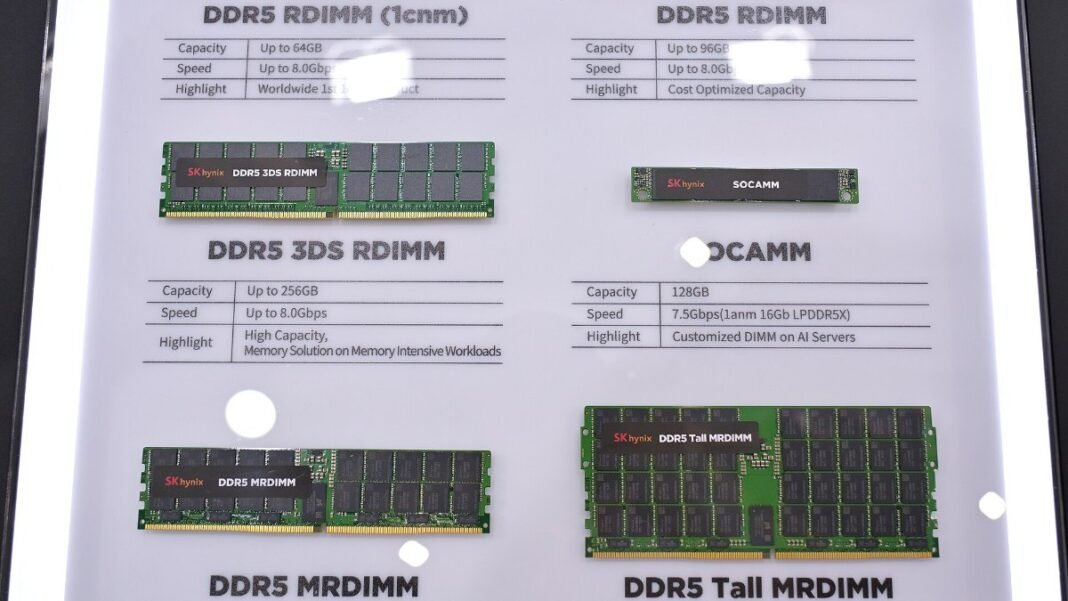
RAM and other memory chip prices have risen sharply through 2026, and market researchers say the pressure is likely to continue into 2027. The main reason, according to analysts, is demand from AI data centres, which has pulled factory capacity away from the memory used in phones, laptops and PCs. Here is a plain explanation of what is happening, what the latest forecasts say, and what it could mean for buyers.
Why are RAM prices rising? The short answer
- AI servers need huge amounts of memory: AI training and inference servers use large amounts of high-bandwidth memory (HBM) and server DRAM.
- Factories are shifting capacity: the three biggest makers, Samsung, SK hynix and Micron, are reported to supply over 95% of the world’s DRAM, and are steering more capacity to higher-margin AI memory.
- Less is left for everyday devices: when more wafers go to HBM, there is less supply of the standard DRAM used in phones, laptops and desktops.
- New supply takes time: building or upgrading a memory fab takes years, so supply cannot catch up quickly.
What is HBM and why does it matter?
HBM (high-bandwidth memory) is a special type of stacked memory placed right next to AI chips such as GPUs. Analysts say it uses far more wafer area per gigabyte than standard DRAM and earns the maker more money per wafer, which is why memory makers favour it. Estimates of the exact ratio vary by source.
What do the forecasts say?
- Earlier in 2026: TrendForce reported very large contract price increases for DRAM in the first and second quarters, with different reports citing different percentages as forecasts were revised.
- Fourth quarter of 2026: in its 30 September release, TrendForce forecast conventional DRAM contract prices to rise about 10 to 15% over the previous quarter and NAND flash by 15 to 20%, saying the pace is slowing because large rises were already priced in. Other reports put the DRAM figure higher, near 20%, so numbers differ.
- Supply growth: IDC estimated that combined DRAM and NAND supply growth would be only around 16 to 17% in 2026, below the pace of AI-driven demand, and warned the shortage could last well into 2027.
- New capacity: reports say Micron expects meaningful new supply no earlier than 2027.
What does it mean for phones, laptops and PCs?
TrendForce says rising memory costs and the use of older low-cost stock are putting pressure on smartphone production, and that phone makers are leaning on existing inventories to support fourth-quarter output, which may delay the full effect on shelf prices. It also says phone makers are pushing toward smaller memory configurations. Market researchers such as Gartner and IDC have warned of higher PC and smartphone prices in 2026 and beyond, and several PC makers have reportedly warned of price increases. These are global projections; we did not find India-specific price lists for this report.
What buyers in India can do
- Compare configurations: check how much RAM you actually need rather than paying for the highest tier.
- Watch festive and bank offers: discounts can offset part of price increases, but compare the final price carefully.
- Consider timing: if you need a new device soon, waiting may not bring lower prices if the shortage lasts into 2027.
- Check upgradeability: on some laptops RAM can be upgraded later; on others it is soldered to the board.
Frequently asked questions
Why is RAM so expensive in 2026?
Analysts say AI data centres are consuming large amounts of memory, and manufacturers are directing capacity to AI-focused memory, which tightens supply of regular RAM.
Will RAM prices come down?
Forecasts are mixed. TrendForce expects continued but slower increases in the fourth quarter of 2026, and IDC says the shortage may last into 2027. Prices depend on new factory capacity and demand.
Which companies make most of the world’s DRAM?
Samsung, SK hynix and Micron.
Are phones and laptops getting costlier because of memory?
Memory is one cost among several, but researchers say higher memory prices are pushing up device costs and encouraging smaller memory configurations.
Questions to think about
- Should countries depend on just three companies for most of the world’s memory chips?
- Is it fair for everyday device buyers to pay more because of AI data centre demand?
- Would you accept a phone or laptop with less RAM to keep the price down?
- Should governments encourage more memory factories, and who should pay for them?
Sources: TrendForce press releases and news (Q4 2026 outlook, 30 September 2026; earlier 2026 quarterly reports), IDC analysis of the global memory shortage, and trade reports on Samsung, SK hynix and Micron. Forecast percentages vary by source and date; check TrendForce and IDC for the latest.