
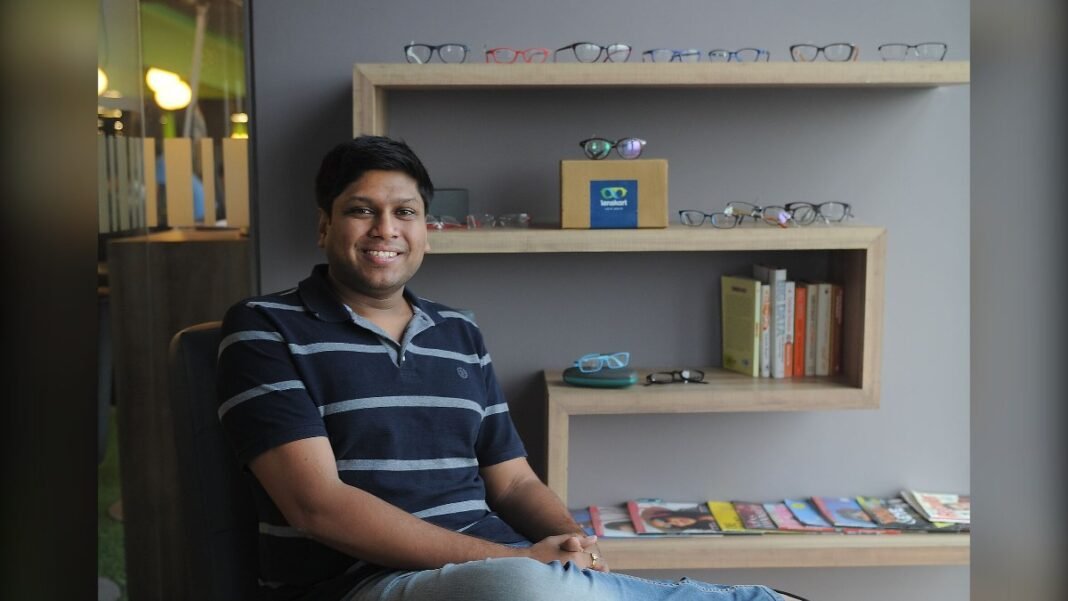
Peyush Bansal is the co-founder and CEO of Lenskart, India’s largest eyewear company, and a shark on Shark Tank India. In November 2025 he took Lenskart public, one of the most watched IPOs of that year.
Peyush Bansal: key facts
- Known for: co-founder and CEO, Lenskart
- Co-founders: Amit Chaudhary and Sumeet Kapahi
- Education: McGill University; IIM Bangalore
- Before Lenskart: worked at Microsoft in the US
- TV: shark on Shark Tank India since its first season
Career
Peyush Bansal returned to India from Microsoft to start his own business. After early ventures, he co-founded Lenskart in 2010 to sell spectacles online at transparent prices, then built a large chain of stores and its own manufacturing.
On Shark Tank India
As a shark, he is known for backing technology and product-led companies and for asking founders about their “why”. He often invests along with other sharks.
Recent news
Lenskart listed on NSE and BSE on November 10, 2025, opening at ₹395 against an issue price of ₹402. Read the Lenskart company profile for more.
In short
What is Peyush Bansal’s education? An engineering degree from McGill University and a management programme at IIM Bangalore.
When did Peyush Bansal start Lenskart? In 2010, with Amit Chaudhary and Sumeet Kapahi.
Is Lenskart listed? Yes, since November 2025.
The career path behind Lenskart
Peyush Bansal studied at McGill University in Canada, worked at Microsoft in the US, and later studied at IIM Bangalore. He returned to India to build something of his own, and after early online ventures he co-founded Lenskart in 2010.
The big idea
Buying spectacles in India used to mean visiting a local optician, with little price transparency. Lenskart joined online ordering with its own manufacturing and physical stores, and offered eye tests, so that one company controlled the whole experience.
What he is known for on Shark Tank
On Shark Tank India, he is often seen as the judge who focuses on the founder’s clarity of thinking and the size of the problem rather than only on current numbers. His comments on product quality and customer experience are shared widely on social media.
Lessons from his journey
- Fix a boring category: ordinary products can hide very large opportunities.
- Control quality: owning manufacturing can protect the experience.
- Combine online and offline: many Indian shoppers want both.
- Think long term: building a physical network takes years and patience.
Frequently asked questions
Is Peyush Bansal on Shark Tank India?
Yes, he has been a judge since the first season.
Questions to think about
- Do founder-led companies perform better after listing?
- Should eyewear be cheaper and more accessible in small towns?
Sources: company information, public interviews, and listing data as reported by Business Standard and Angel One.