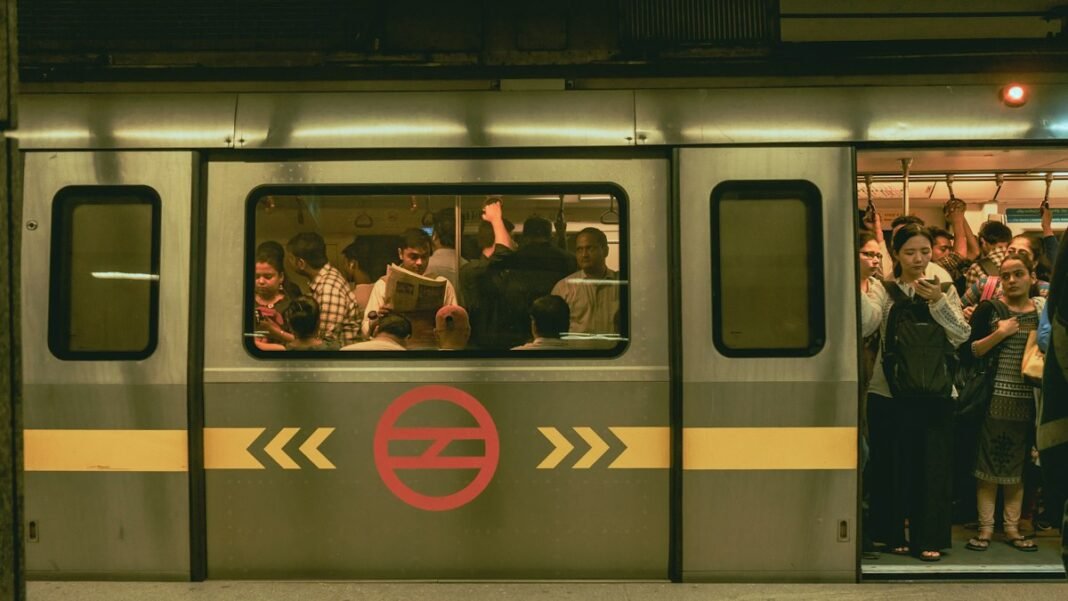
Central Delhi came to a near standstill on Saturday, October 10, as authorities moved to stop a youth-led protest from reaching the city centre. 57 metro stations were shut, several long-distance trains were cancelled and mobile internet was suspended around the protest area, according to Al Jazeera.
Thousands of police and paramilitary personnel were deployed. Vehicles coming into the capital were stopped at checkpoints, and buses were searched for protesters.
Who was protesting, and why?
The rally was called by the Cockroach Janta Party (CJP), a youth movement that began online in May as political satire. Its members are demanding that Chief Election Commissioner Gyanesh Kumar resign over a revision of voter lists. According to an Indian Express report, the revision has removed more than 130 million names.
The Election Commission says the exercise is meant to remove duplicate and ineligible voters. Both the Commission and the BJP deny any wrongdoing.
Why police stopped the rally
Police refused permission for a rally at Jantar Mantar, the city’s usual protest spot. They said the request came in late and that the group had broken promises made at earlier protests. Roads to the site were blocked with layers of metal barricades.
The Supreme Court had said on Friday that some trains must still run and that a blanket metro shutdown was unlikely.
How many people were detained?
The figures vary. Reuters, quoting a Home Ministry official, said about 2,000 people were detained in Delhi. The Hindu, quoting Delhi Police sources, put it at nearly 2,500. News agency ANI reported about 600 arrests in Mumbai. The CJP claims at least 10,000 people were held across the country, a number that has not been independently confirmed.
A Delhi court later ordered the release of three of the movement’s leaders, including founder Abhijeet Dipke, on the condition of no breach of peace for a year, their lawyer said.
What the two sides are saying
BJP spokesman Sambit Patra called the protesters “anarchic elements”. Congress president Mallikarjun Kharge said the government had turned the “Mother of Democracy” into a “Muzzled Democracy”. The UN human rights office asked authorities to respect the right to peaceful protest, while India’s mission to the UN in Geneva called those concerns “misplaced”.
What it means if you live or work in Delhi
No official estimate of business losses has been published. But shut metro stations, closed markets and blocked roads make it hard for staff, customers and delivery riders to get around central Delhi.
The internet suspension also hits small shops. UPI and card machines need a data connection, so shopkeepers relying only on mobile data may not be able to take payments. Keeping a Wi-Fi or broadband connection as backup, and some cash, makes sense on such days. Our guide to new UPI charges for shops explains the other big change coming for merchants.
Before you head out, check updates from the Delhi Metro and Delhi Traffic Police, and confirm train timings with the railways.
This is a developing story. Figures from different sources have been attributed and may change as more official information comes in.