


Karwa Chauth is a one-day fast kept mostly in North and West India. Married women traditionally fast from sunrise until the moon appears, praying for their husband’s long life and the family’s wellbeing. This guide was first written in 2024 and has been updated in October 2026 with the new date and timings, plus a simple explanation of the rituals and some health advice.
The short version
- Date in 2026: Wednesday, 28 October 2026, according to most panchang sources. A few websites list 29 October, so confirm with a local panchang.
- Chaturthi tithi (as listed by one source): starts about 1:06 pm on 28 October and ends about 2:44 pm on 29 October.
- Puja muhurat in Delhi (approximate): about 5:39 pm to 6:56 pm.
- Moonrise in Delhi (approximate): about 8:14 pm. It differs from city to city by several minutes.
Why the date changes every year
Karwa Chauth falls on the fourth day (Chaturthi) of the dark fortnight of the Hindu month of Kartik. The Hindu calendar follows the moon, so the date on the usual calendar moves every year. In 2024 it was on 20 October. In 2026 it is about a week later because Diwali also falls later, on 8 November.
How the fast works, step by step
- Sargi (before sunrise). In many families, the mother-in-law prepares a pre-dawn meal for the daughter-in-law with fruit, dry fruit, sweets and parathas. It is eaten before sunrise.
- The fast. The traditional fast is nirjala, with no food and no water. Many women today keep a fruit-only fast or take water if their health needs it.
- Getting ready. Women often wear red or other bright clothes and make-up (the sixteen adornments in tradition). Mehendi is applied the day before.
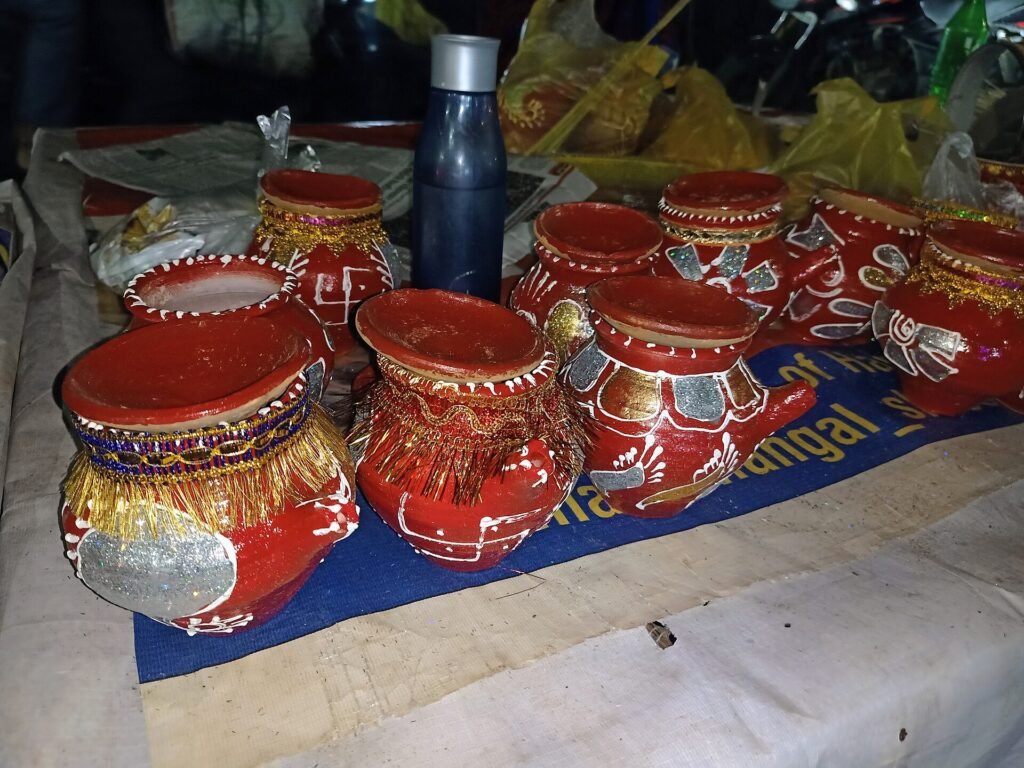
- Evening puja. Women gather, set up the puja plate with a lamp, roli, rice, sweets, a sieve and a karwa (a small pot with a spout), and listen to the Karwa Chauth story. The deities worshipped are Shiva, Parvati, Ganesha and Kartikeya.
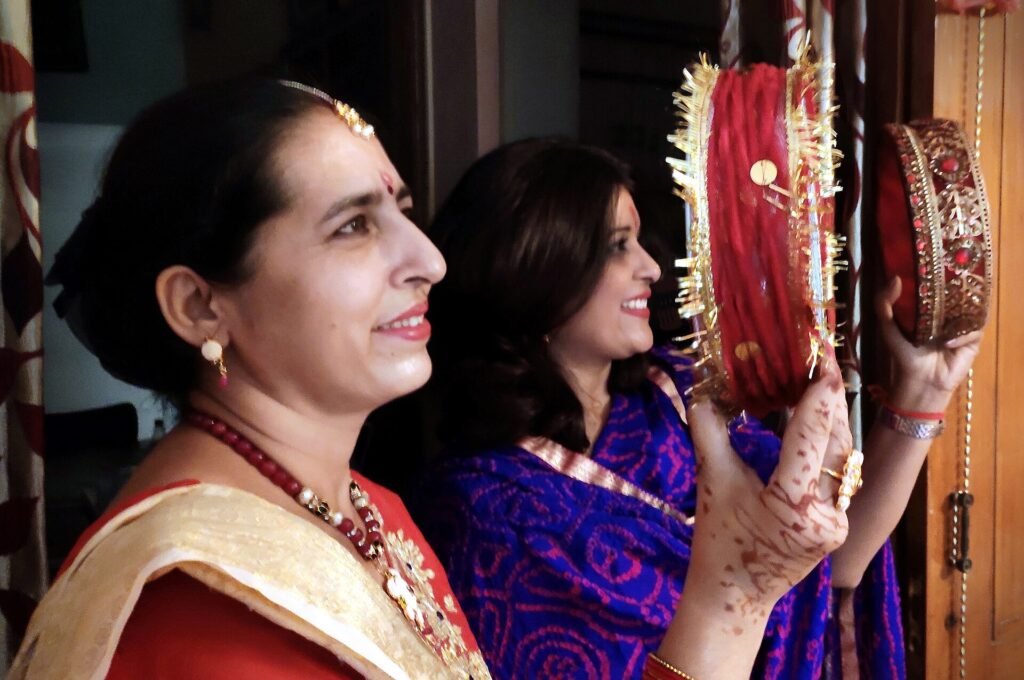
- Moon sighting. When the moon rises, women look at it through a sieve, offer water (arghya), then look at their husband through the sieve.
- Breaking the fast. The husband offers water and the first bite. The family then eats together.
The story behind the fast
There are several versions. A popular one tells of a queen, Veeravati, who kept the fast for the first time at her parents’ home. Her brothers could not bear to see her hungry and tricked her into breaking the fast before the moon rose. Soon after, she received news that her husband was ill, and she then kept the fast with full devotion to bring him back to health. Other stories mention Karwa, a devoted wife, and Savitri. Different regions tell the tale differently.
Changing traditions
For many families, the day is as much about togetherness as about ritual. More husbands now fast along with their wives, and many couples treat it as a day to appreciate each other. Some women choose not to fast at all, or keep a lighter fast. These are personal choices, and each family decides for itself.
Health tips if you are fasting
- If you are pregnant, breastfeeding, diabetic, or have blood pressure, kidney or heart problems, speak to your doctor before a waterless fast.
- Eat a balanced sargi with protein and fibre, such as dry fruit, curd, fruit and oats. Drink water before sunrise.
- Avoid heavy work in the sun and rest in the afternoon.
- Break the fast slowly with water or a drink with a little salt and sugar, then a light meal. Avoid oily or very sweet food straight away.
- If you feel dizzy or weak, drink water and eat something. Health matters more than a ritual.
How to find the exact time for your city
Moonrise changes with your location, so check a trusted panchang (such as Drik Panchang) or your local temple a few days before. Many weather and calendar apps also show live moonrise time on the day.
Questions to think about
- In your family, how has Karwa Chauth changed over the years?
- Should the rules of a fast be relaxed when a person has a health condition?
- What is the best way to share the work of festival preparation among all family members?
Related reading
- करवा चौथ: तिथि, पूजा का समय, व्रत की विधि और महत्व (हिंदी)
- Diwali shopping 2026: how to set a festive budget
- Dhanteras 2026: date, shubh muhurat and smart tips to buy gold
Sources
This article is for general information. Dates and times vary between panchangs and cities. Please ask your doctor about fasting if you have a health condition.


